Blog
Training science, product updates, and insights.
 science
Entry #043: Easy, Hard, or In Between: How Endurance Athletes Split a Training Week Across Intensity Zones
A coach I trained under years ago kept a worn spiral notebook in which he logged every session his athletes did, sorted into three columns: easy, mode...
 science
Snippet #040: Why the Same Training Produces Such Different Results
Give hundreds of sedentary adults the same 20-week aerobic program and the spread of outcomes is striking. In the HERITAGE Family Study, the average ...
OpenLab #012: The Same Hour, Twice: Norm Alvis on Five Hour Records and the Ninety-Eight Days Between Two of Them
Same rider, same velodrome, same event, ninety-eight days apart. The one thing Norman Alvis changed was the coach, and the confounds are as large as t...
 science
Entry #042: The Invisible Engine: What Strength Training Really Does for Endurance Athletes
The conversation about strength training for endurance athletes used to be short. For most of the twentieth century the prevailing wisdom held that a ...
 science
Snippet #039: Protecting Muscle While Losing Fat in Endurance Athletes
A sustained caloric shortfall drives fat loss, but some weight shed in a deficit can come from lean tissue rather than fat alone. Research shows that...
 OpenLab
 #011: What Fits: Norm Alvis on Four Decades of Pairing Proven Training With a Changing Life
Norman Alvis says the science is proven and the art is the fit. The evidence agrees with him more than it usually agrees with a claim that broad.
 science
Entry #041: Running Economy: The Efficiency Dimension That Separates Two Equal Engines
Put two runners side by side who share an identical ceiling for oxygen uptake, the same lactate thresholds, the same training history. On paper they a...
 science
Snippet #038: Carbohydrates Refill Your Fuel Tank. Protein Repairs the Engine.
After endurance exercise, stored muscle fuel (called glycogen) is what powered you, and carbohydrate is the only nutrient that refills it. Protein, es...
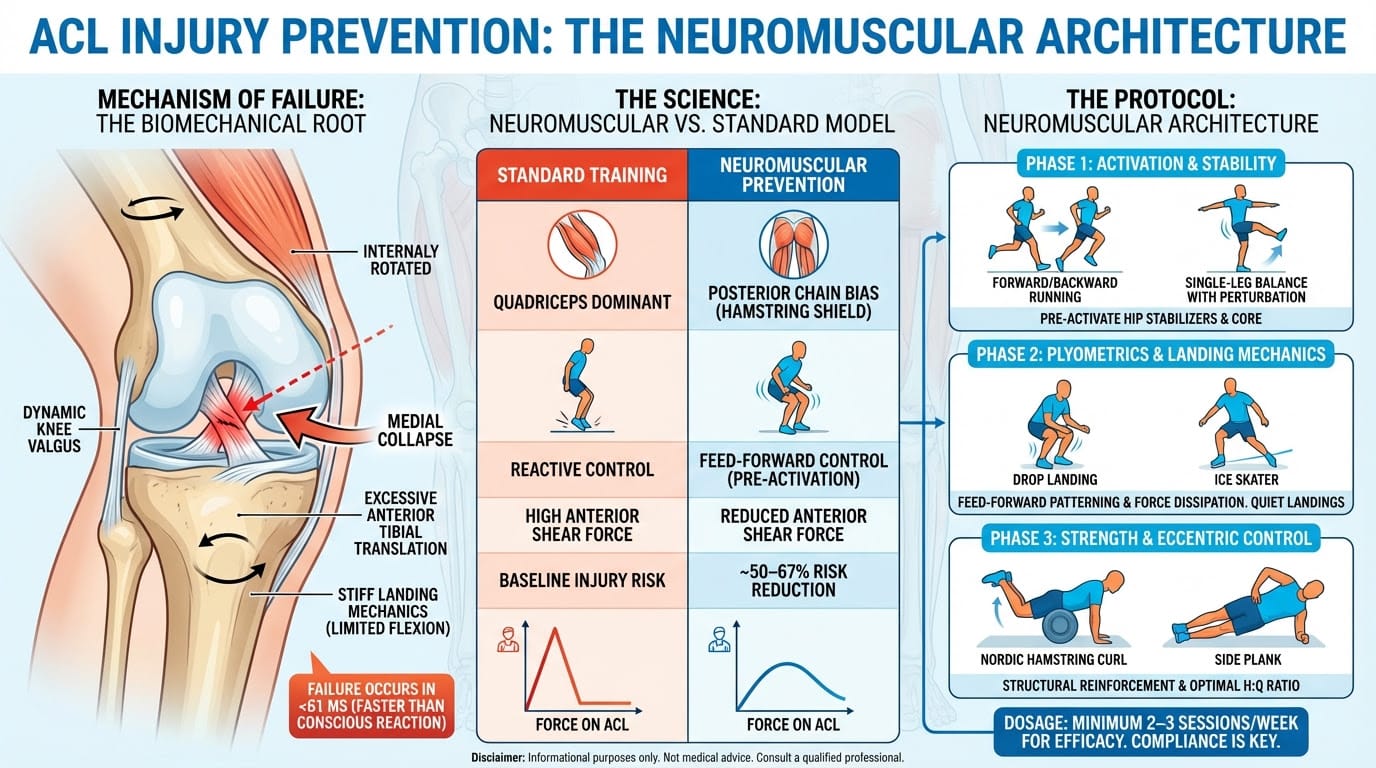
Open Lab #010: Preventative strategy and training methodology to prevent ACL Injuries - RevaCenter
We spend a disproportionate amount of time obsessing over engine displacement—VO2max, lactate thresholds, and mitochondrial density—while often neglec...
 science
Entry #040: Training in the Furnace: How Heat Acclimation Rebuilds the Endurance Engine
Every endurance athlete knows the feeling of a body in revolt on a hot day. The pace that felt easy in spring becomes a slog by midsummer. The heart ...
 science
Snippet #037: Fasted Training and the Fat-Oxidation Shift
Starting an exercise session with low carbohydrate availability, such as a fasted morning ride, shifts the body away from burning glucose and toward b...
 science
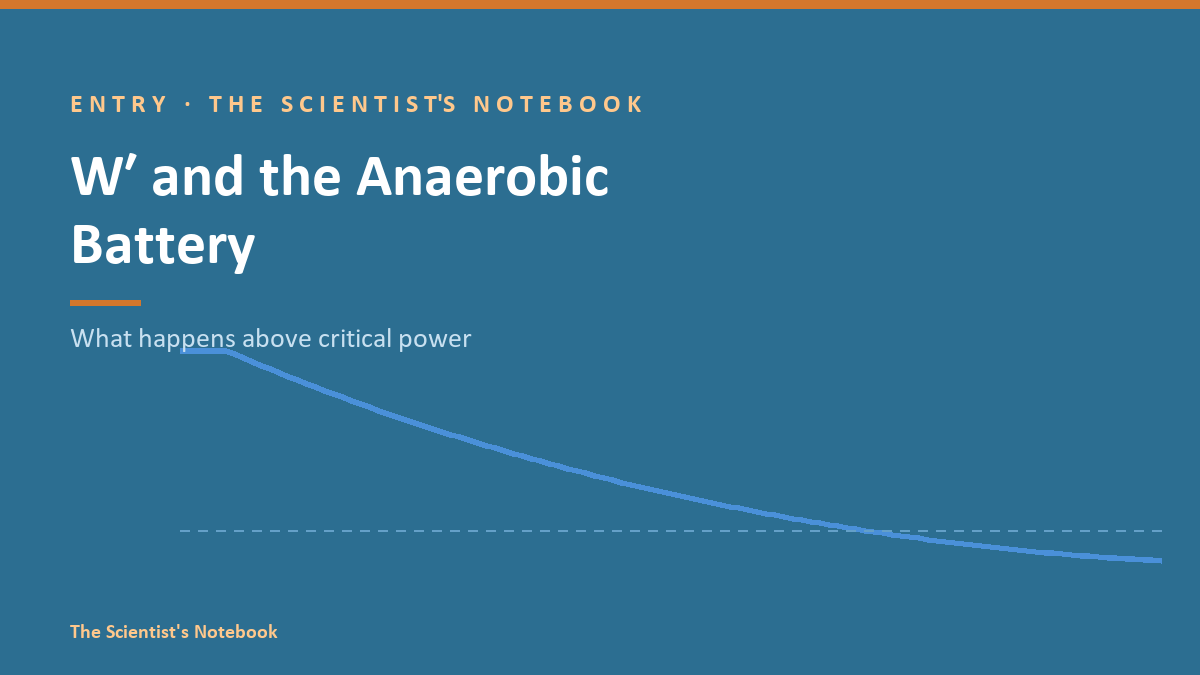
Entry #039: W′ and the Anaerobic Battery: What Happens Above Critical Power
There is a moment in almost every hard race where the body stops feeling like it belongs to you. The legs flood, the breath ragged, the gap to the whe...
 science
Snippet #036: When the Gut Wall Cracks Under Heat and Effort
During prolonged or intense exercise, especially in the heat, blood is redirected away from the digestive tract toward working muscles. That reduced b...
 science
Entry #038: Heart Rate Variability for Endurance Athletes: What It Measures, When It Helps, and Where It Is Just Noise
You wake up, reach for your phone, and lie still for sixty seconds while a strap or a camera lens reads your pulse. A number appears, lower than yest...
 science
Snippet #035: Phosphocreatine: The Muscle's Instant ATP Battery
Creatine accumulates in muscle mainly as phosphocreatine (PCr), a high-energy compound that rapidly re-donates a phosphate group to adenosine diphosph...
 science
The athletes at the end of the alphabet
Bruna Maia is a runner, a data scientist and an electrical engineer. She played tennis at international level for a decade, burned out on it, and foun...
 science
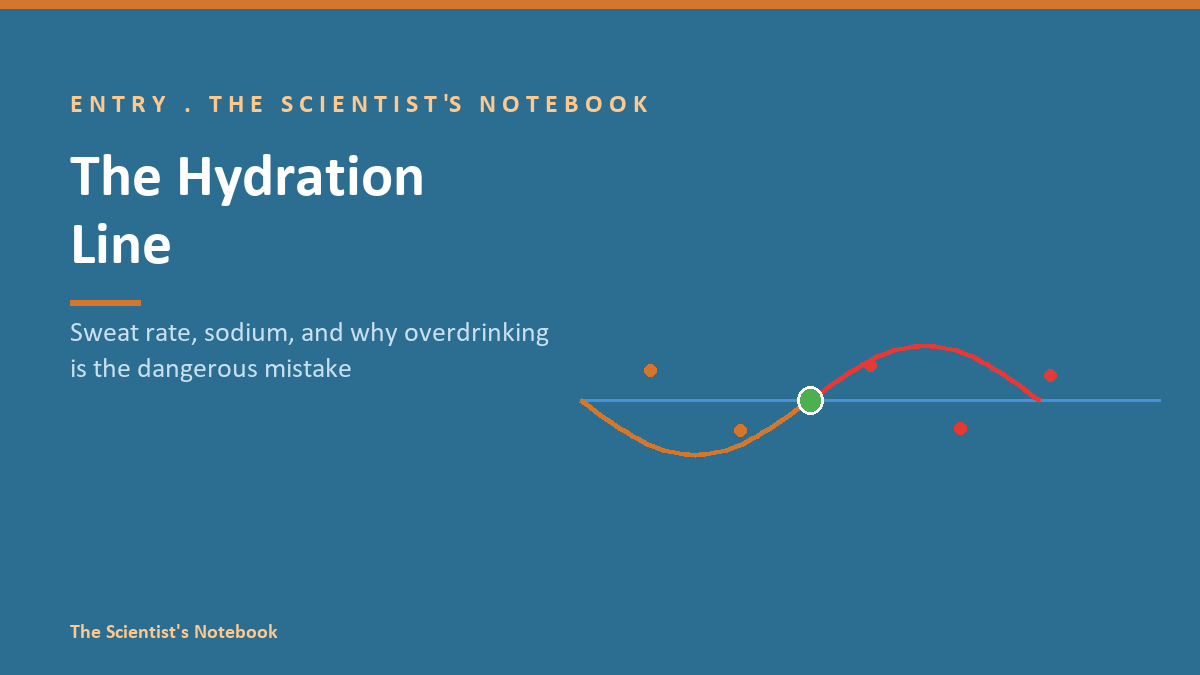
Entry #037: The Hydration Line: Sweat Rate, Sodium, and Why Overdrinking Is the Dangerous Mistake
A few summers ago I weighed two athletes on the same scale, before and after the same two-hour ride, in the same heat. One came back three pounds ligh...
 science
Snippet #034: Minutes Near the Ceiling: Why Time at VO2max Shapes Aerobic Adaptation
VO2max is the ceiling rate at which the body can use oxygen to fuel muscle. The data show that accumulating a few minutes per session above roughly 90...
 science
Entry #036: Nitrate, Bicarbonate, Beta-Alanine: The Big Three, and Where Each One Actually Helps
There is a shelf in my pantry that tells a small, slightly embarrassing story about endurance science. A purple bottle of beetroot concentrate that st...
 science
Snippet #033: What Your Muscle Oxygen Sensor Is Actually Reading
Near-infrared spectroscopy (NIRS) shines near-infrared light through skin into muscle and reads how much hemoglobin and myoglobin is carrying oxygen. ...