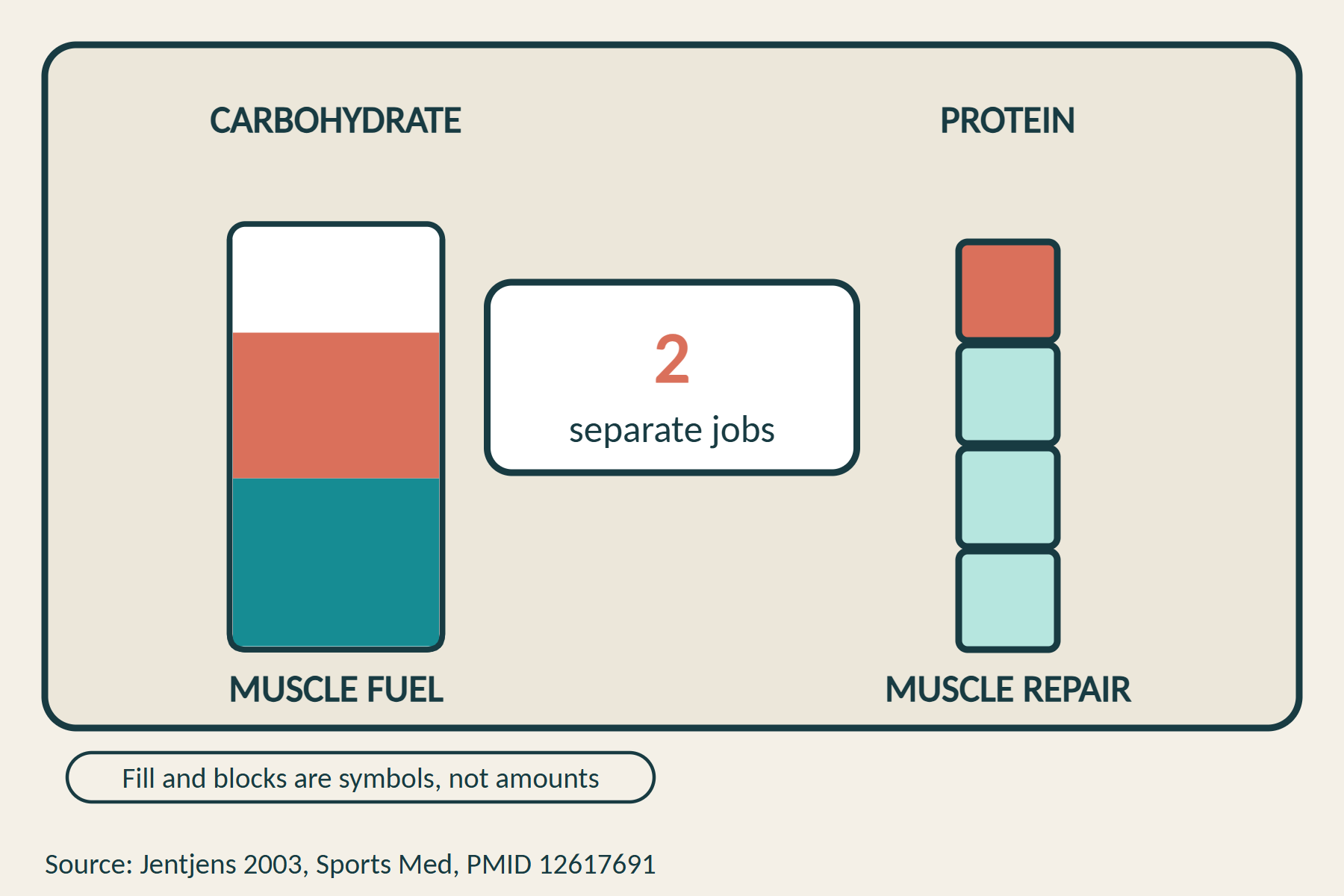
Snippet #038: Carbohydrates Refill Your Fuel Tank. Protein Repairs the Engine.
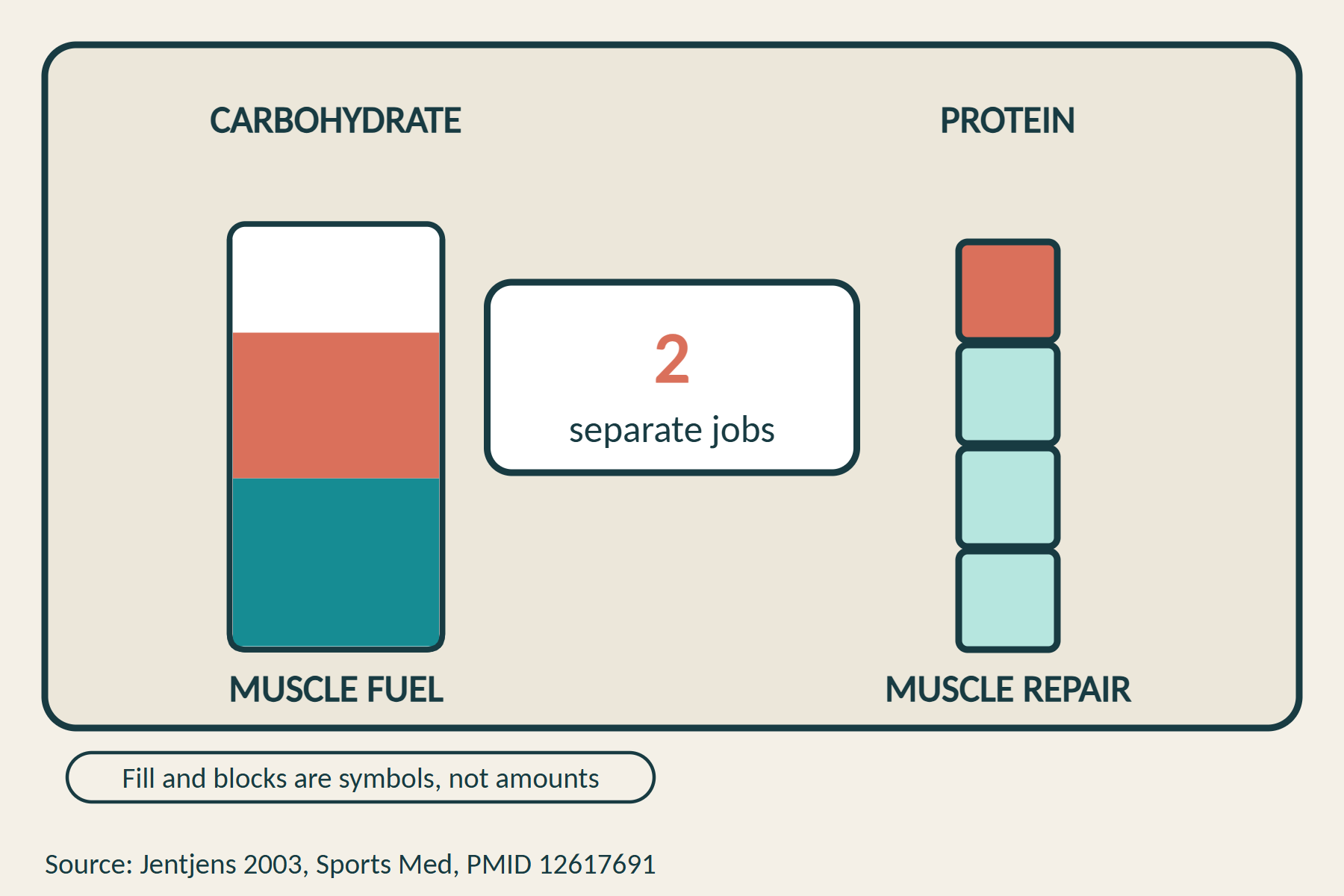
After endurance exercise, stored muscle fuel (called glycogen) helped power you, and carbohydrate is the main nutrient that refills it.
Protein, especially whey, is rich in the amino acid leucine, which activates muscle protein synthesis: the cellular process that repairs and remodels muscle fibers.
These are two separate recovery problems with different nutritional solutions.
A 2003 review in Sports Medicine concluded that when carbohydrate intake is adequate, adding protein is not associated with meaningfully faster glycogen rebuilding.
For athletes with back-to-back sessions, refilling glycogen takes priority because muscles cannot sustain high-intensity effort without stored fuel.
Protein supports the repair process, and the review notes it might aid post-exercise muscle protein building, but that is a slower, longer-horizon benefit.
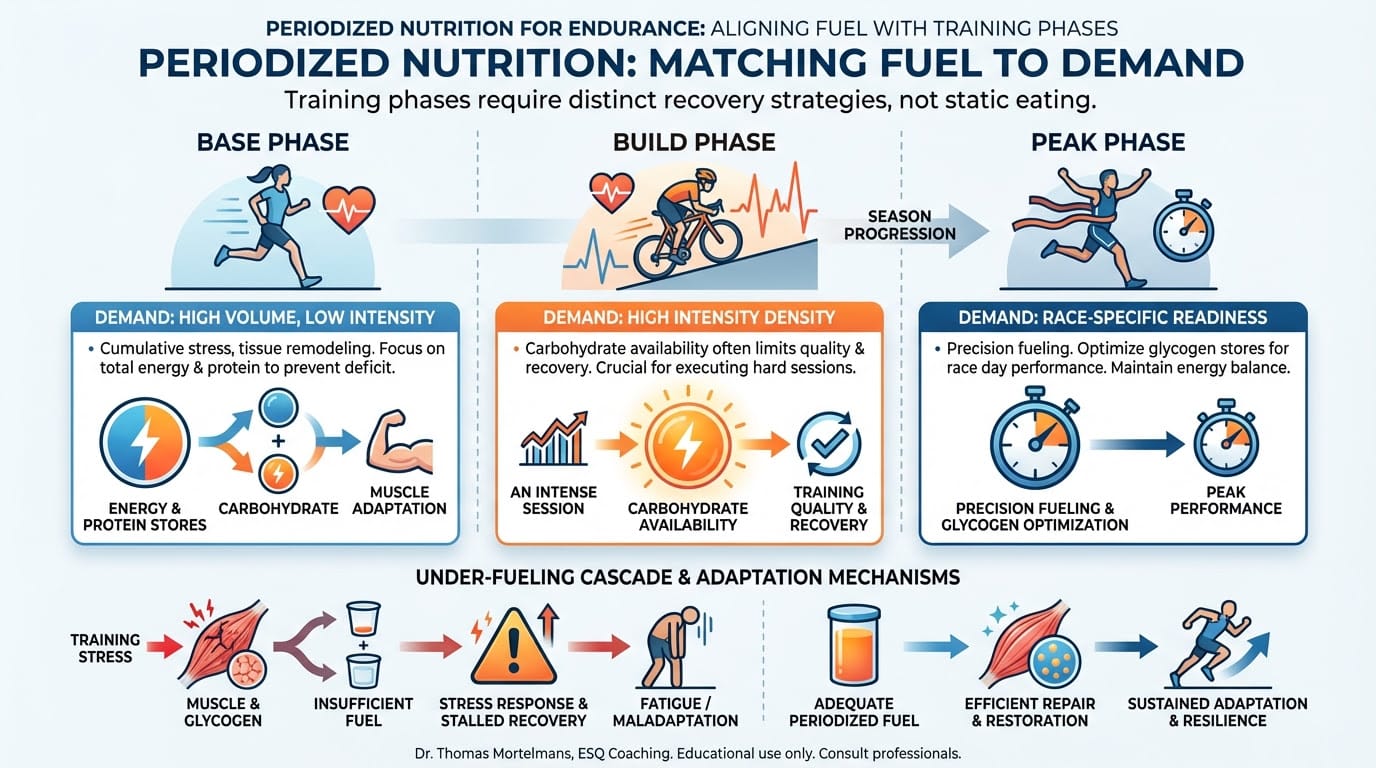
Which nutrient to emphasize depends on how much time separates sessions, total daily intake, and individual training load.
The review covers short-term recovery, the first few hours after exercise; protein's repair role becomes more prominent as recovery windows grow longer.
If you have 60 seconds, I would value your anonymous feedback. You can share it here.
Health disclaimer
This summarizes one review plus general muscle physiology and cannot say what any one athlete should eat after training. It is not nutrition advice. Not medical advice.
 Thomas Mortelmans
 Thomas Mortelmans
 Thomas Mortelmans
Keep going
Gradescale turns your training history into the models in this piece: power-duration, load balance, and readiness, each with its sources.
Training plans built on the same evidence base:
Thomas MortelmansJoin our Discord community:
Thomas Mortelmans