Snippet #037: Fasted Training and the Fat-Oxidation Shift
Starting an exercise session with low carbohydrate availability, such as a fasted morning ride, shifts the body away from burning glucose and toward burning fat.
One key driver is a signaling molecule called AMPK (think of it as a low-fuel sensor), which activates genes that build fat-burning machinery inside muscle cells.
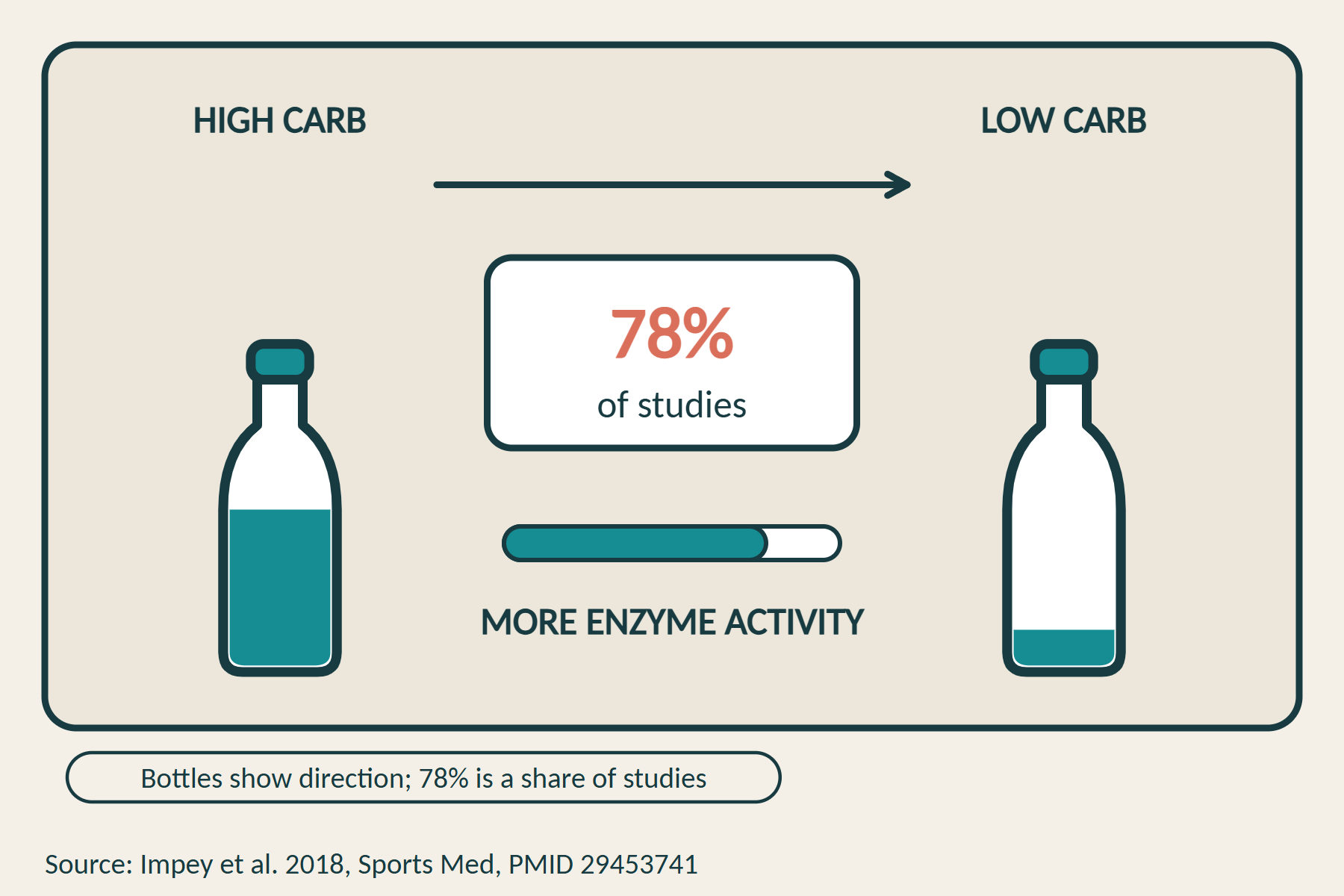
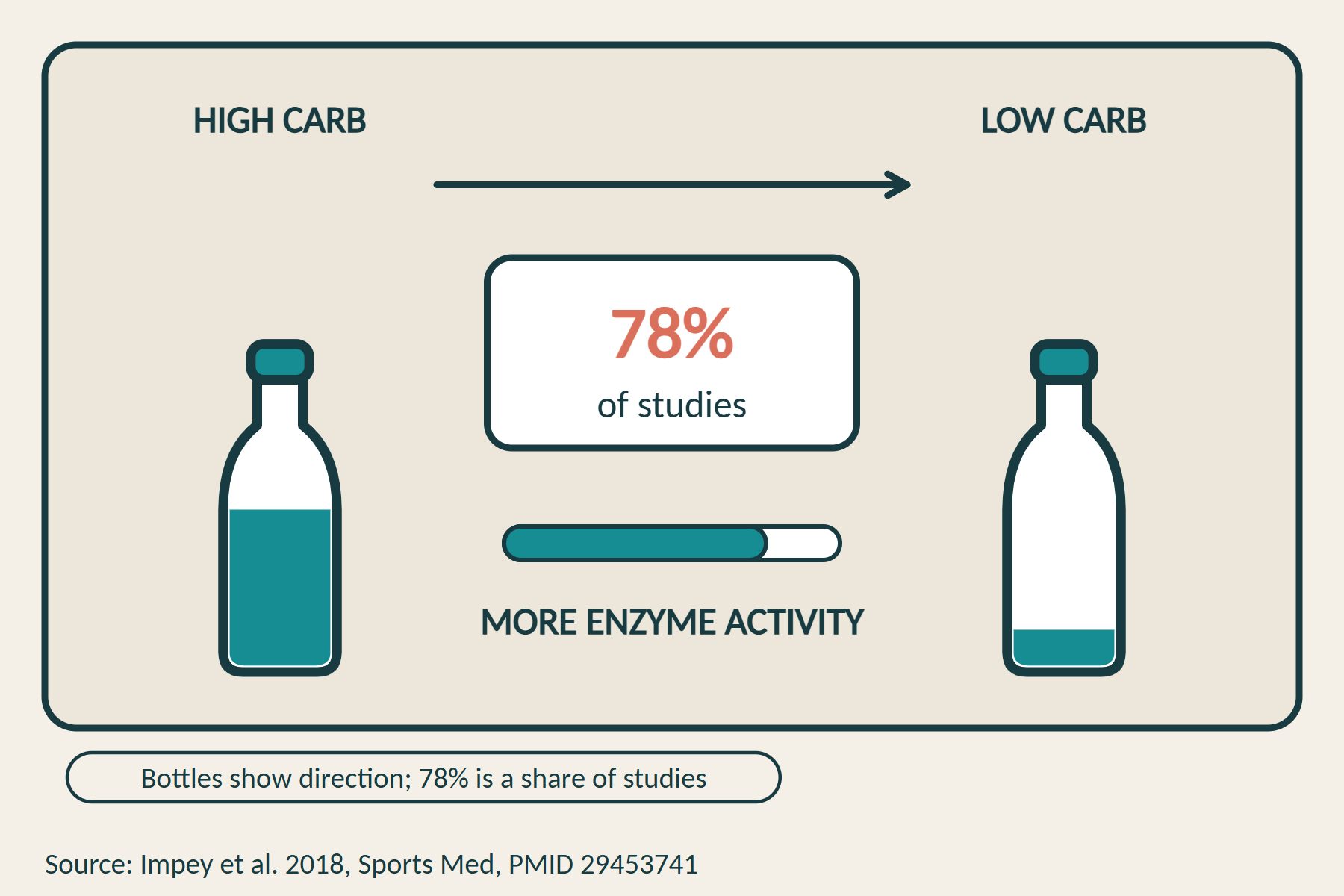
Of 9 training studies in men, roughly 78% found that train-low interventions raise oxidative enzyme activity or protein content in skeletal muscle more than training with high carbohydrate availability.
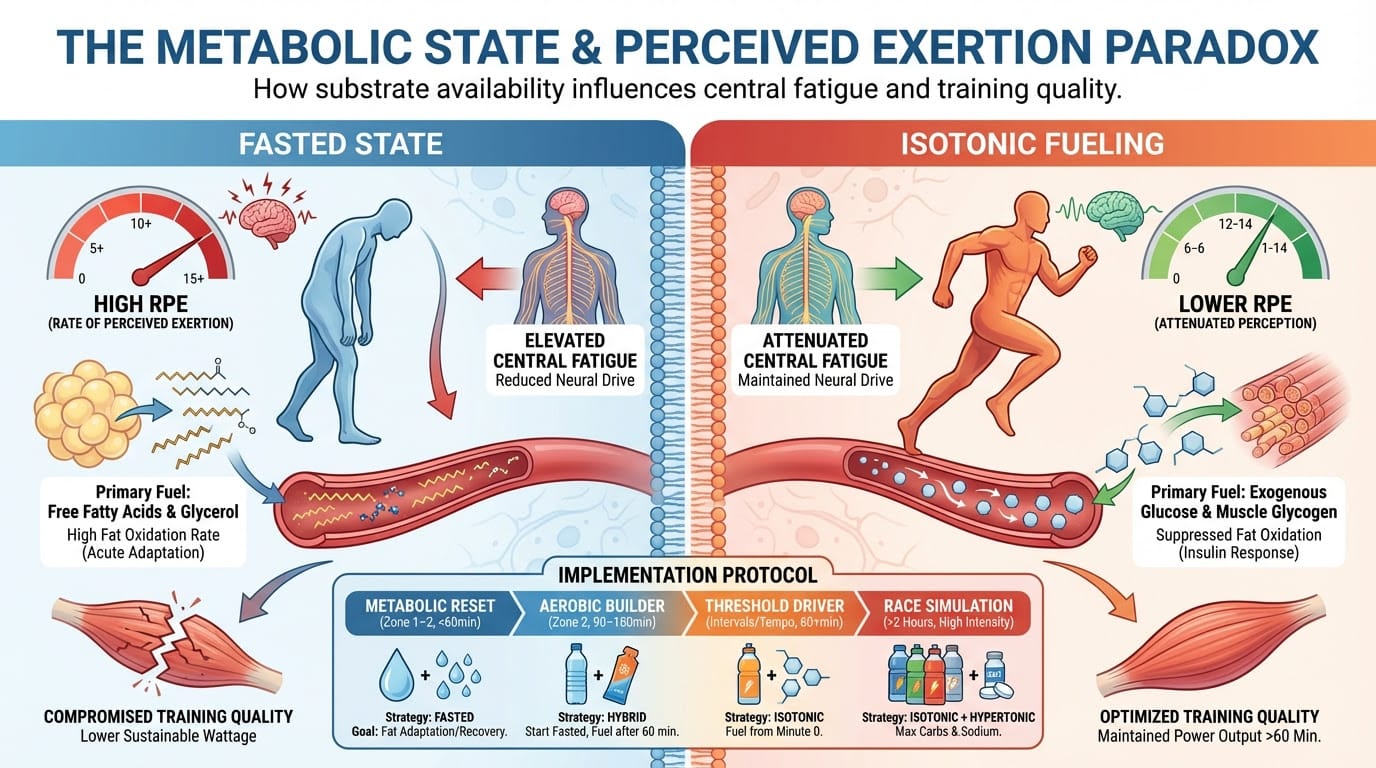
The adaptation is real, but it comes at a cost. Hard sessions completed in a low-carbohydrate state are typically lower in quality.
Athletes report higher perceived effort and are less able to hit the intensities that drive key fitness gains. The signaling benefits and the session-quality cost coexist, which is what makes strategic timing of train-low sessions meaningful.
 Thomas Mortelmans
According to Impey et al. 2018, these molecular adaptations do not reliably translate into improved performance.
Fewer than half of train-low trials show a performance benefit, and glycogen depletion varies between athletes, with the size of the adaptation appearing to depend on how far muscle glycogen is actually depleted during the session.
If you have 60 seconds, I would value your anonymous feedback. You can share it here.
Health disclaimer
This summarizes one review of train-low studies and cannot predict how any one athlete responds. It is not advice to train fasted. Not medical advice.
Thomas Mortelmans Thomas Mortelmans
Keep going
Gradescale turns your training history into the models in this piece: power-duration, load balance, and readiness, each with its sources.
Training plans built on the same evidence base:
Thomas MortelmansJoin our Discord community:
Thomas Mortelmans