Snippet #035: Phosphocreatine: The Muscle's Instant ATP Battery
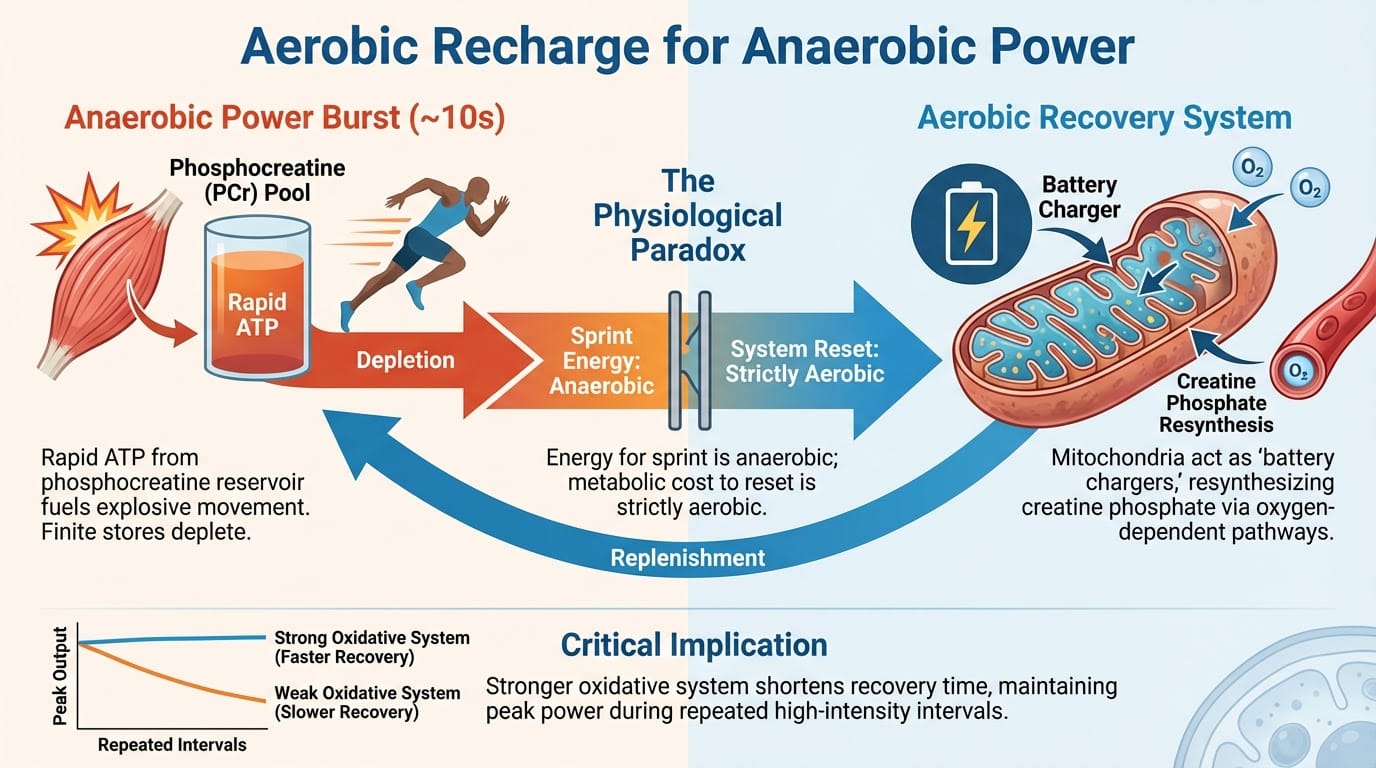
Creatine accumulates in muscle mainly as phosphocreatine (PCr), a high-energy compound that re-donates a phosphate group to adenosine diphosphate, regenerating ATP within the first seconds of intense effort.
This reaction, catalyzed by creatine kinase, runs without oxygen, the body's fastest ATP-resynthesis route.
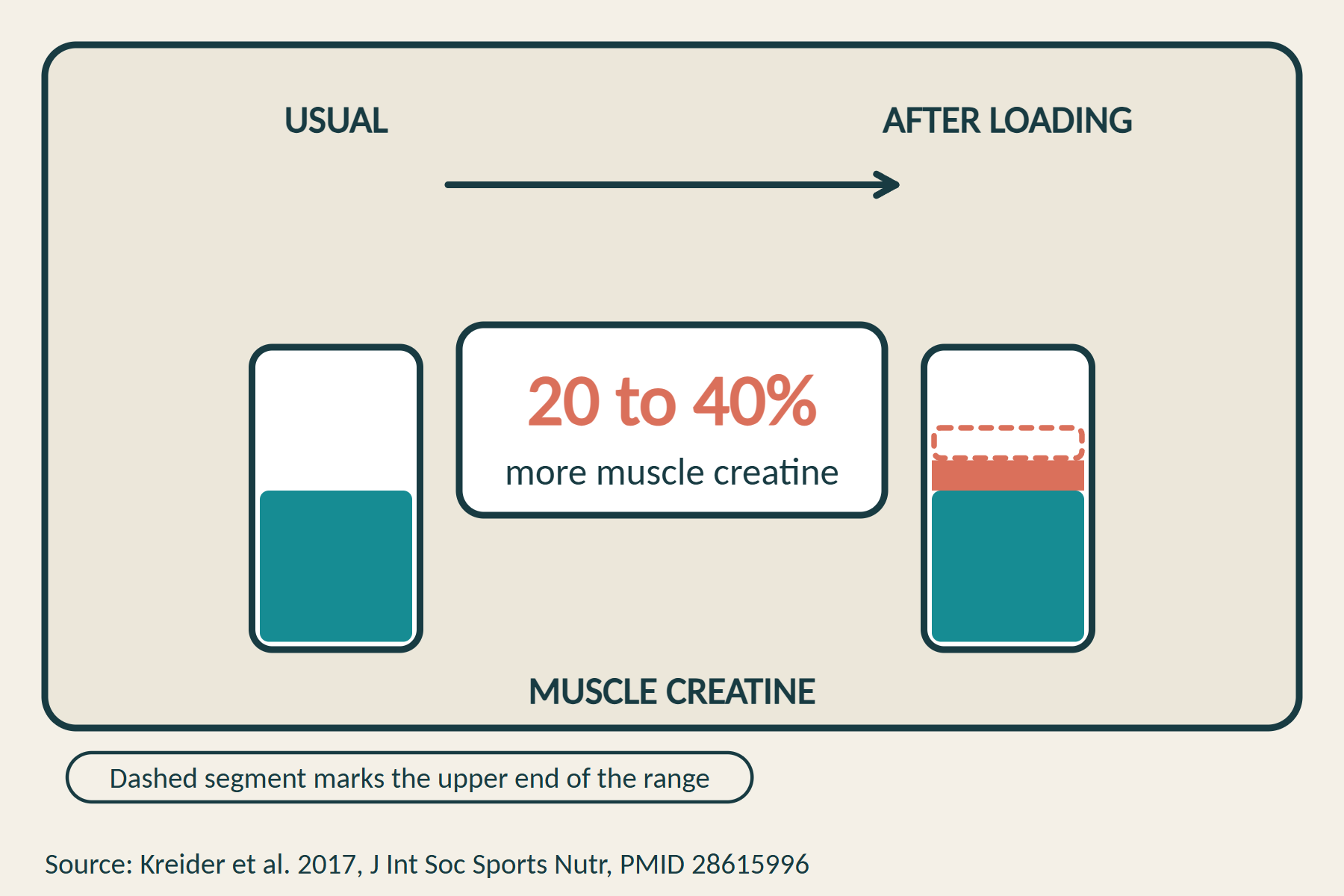
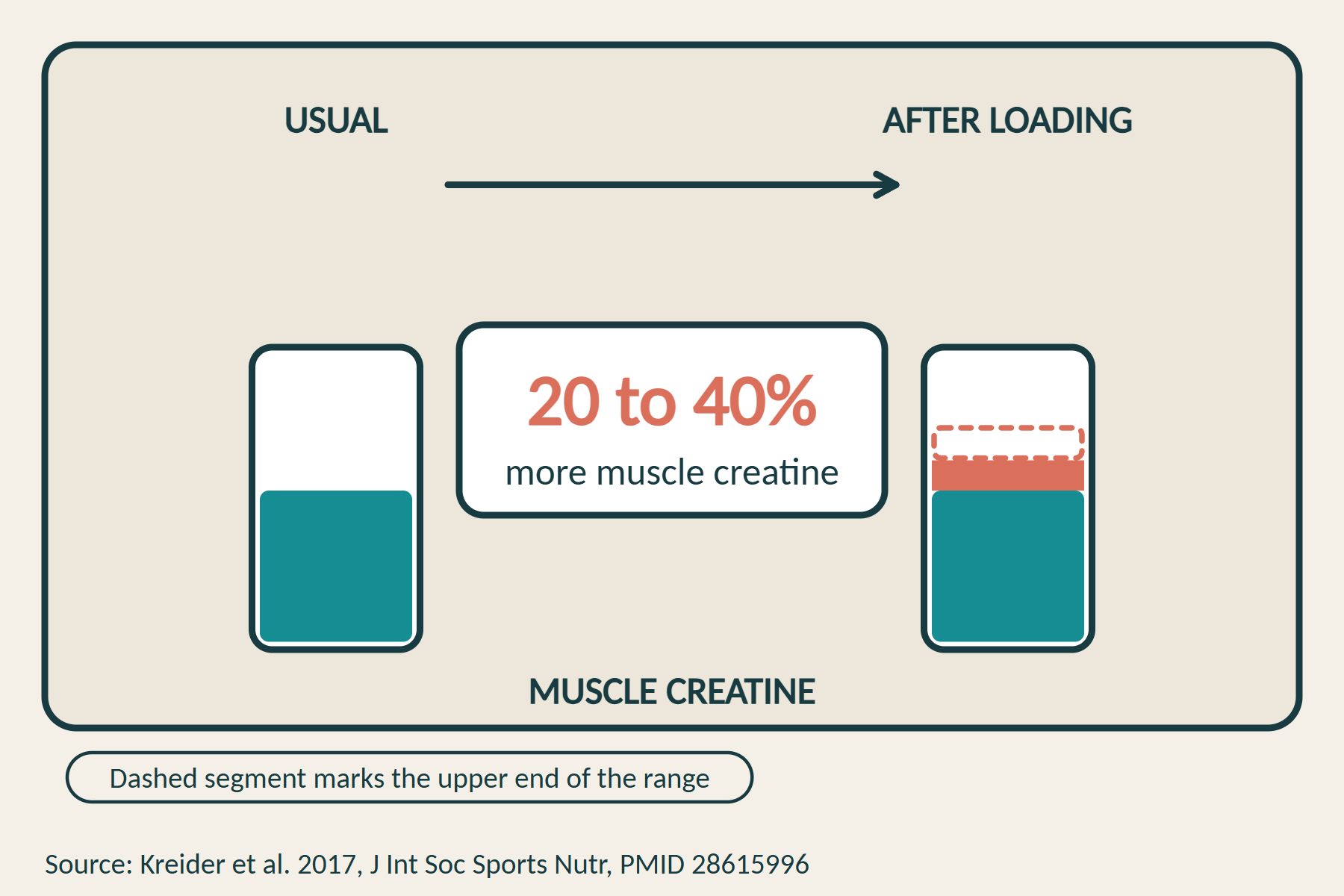
Supplementation raises muscle creatine stores by roughly 20 to 40 percent and speeds PCr resynthesis during recovery between efforts, as summarized in Kreider et al. 2017.
For athletes doing repeated high-intensity bursts (sprints, surges, heavy lifts), a fuller PCr reservoir means each successive effort starts with more immediate fuel available.
The position stand reports that high-intensity and repetitive exercise performance generally rose by about 10 to 20 percent after creatine loading, depending on the rise in muscle PCr.
Steady aerobic efforts at moderate intensity rely more heavily on oxidative phosphorylation, so PCr's contribution is smaller there and performance gains are correspondingly modest.
Response is not uniform: people who start with fuller stores have less room to load, while vegetarians' lower stores may rise more.
An early body-mass gain from water retention (about 0.5 to 1.0 liters in initial studies) is relevant for weight-bearing sports where power-to-weight ratio matters.
If you have 60 seconds, I would value your anonymous feedback. You can share it here.
Health disclaimer
This summarizes a society position stand and cannot predict your response to a supplement. Supplements carry risks of their own. Drug-tested athletes: supplements can contain banned substances. Not medical advice.
 Thomas Mortelmans
 Thomas Mortelmans
Keep going
Gradescale turns your training history into the models in this piece: power-duration, load balance, and readiness, each with its sources.
Training plans built on the same evidence base:
Thomas MortelmansJoin our Discord community:
Thomas Mortelmans