Snippet #032: Muscle Memory Is Written in Your DNA's Dimmer Switches
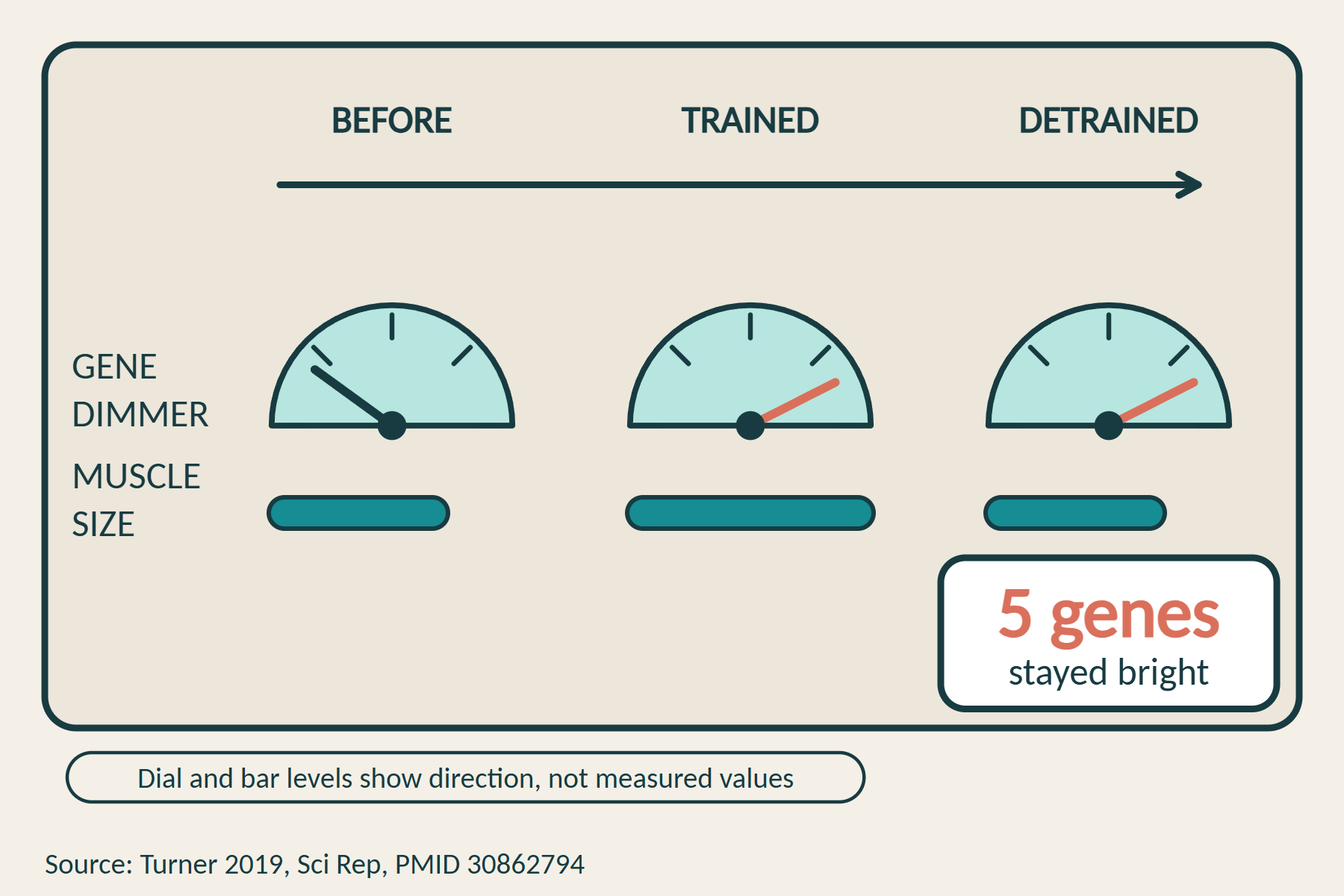
DNA methylation works like a set of dimmer switches sitting on top of your genes, turning each one down or up without rewriting the gene itself.
When untrained people did seven weeks of resistance training, the training stripped these dimmers off a cluster of muscle genes, brightening them.
After seven weeks off resistance training, once muscle size had drifted back to baseline, five of those genes stayed switched bright: a chemical memory that the muscle had once trained (Turner et al. 2019).
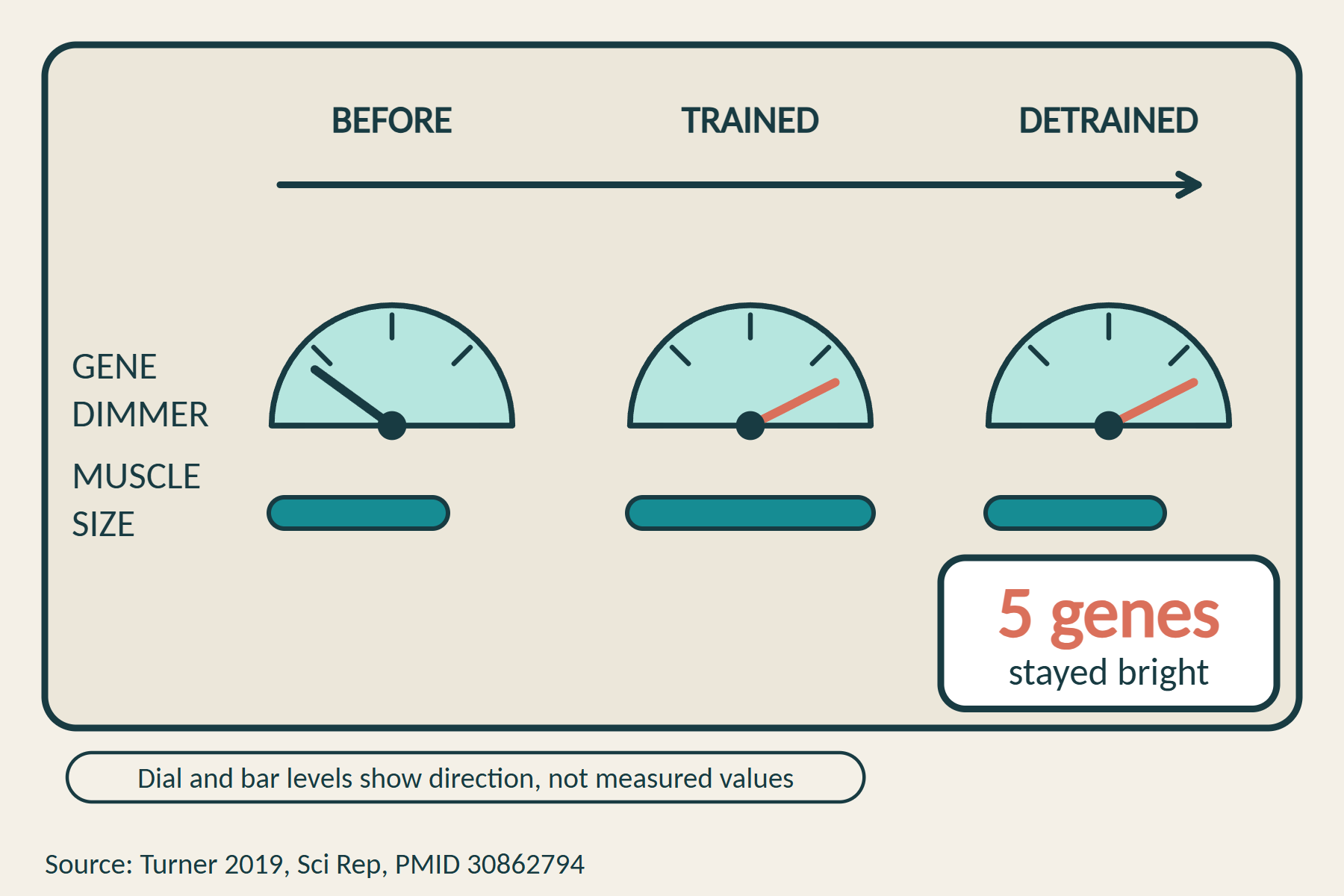
This retained signature is a plausible basis for the familiar feeling of coming back faster after a layoff.
Genes that are already primed may get re-read quickly, so a muscle with a training history can bring its building machinery online sooner than one starting from scratch.
 Thomas Mortelmans
Years of consistency are not only stored as fitness you can lose.
These findings come from short windows of weeks, in small samples, and mostly from resistance rather than endurance training.
The older idea that extra muscle nuclei are kept forever is contested, so a methylation memory is the better-supported account, though how long it lasts is still unknown.
If you have 60 seconds, I would value your anonymous feedback. You can share it here.
Health disclaimer
This summarizes one analysis of muscle methylation after weeks of resistance training in a small group. It cannot say how quickly any one person regains fitness after a break, and it is not a training recommendation. Not medical advice.
Thomas Mortelmans Thomas Mortelmans
Keep going
Gradescale turns your training history into the models in this piece: power-duration, load balance, and readiness, each with its sources.
Training plans built on the same evidence base:
Thomas MortelmansJoin our Discord community:
Thomas Mortelmans