Snippet #028: Capillary Density and the Last Mile of Oxygen Delivery
Endurance training stimulates angiogenesis, the growth of new capillaries (the smallest blood vessels) around muscle fibers.
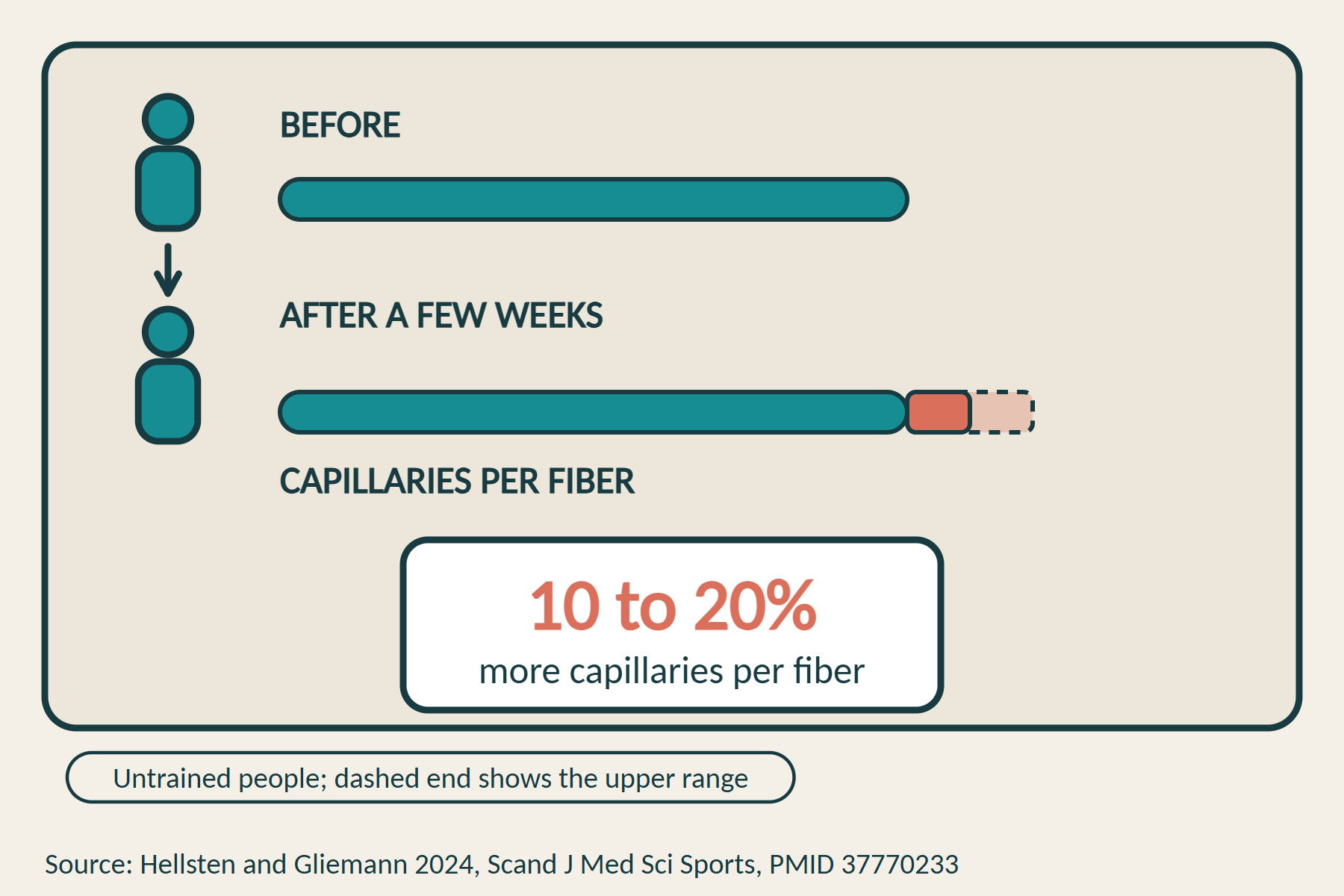
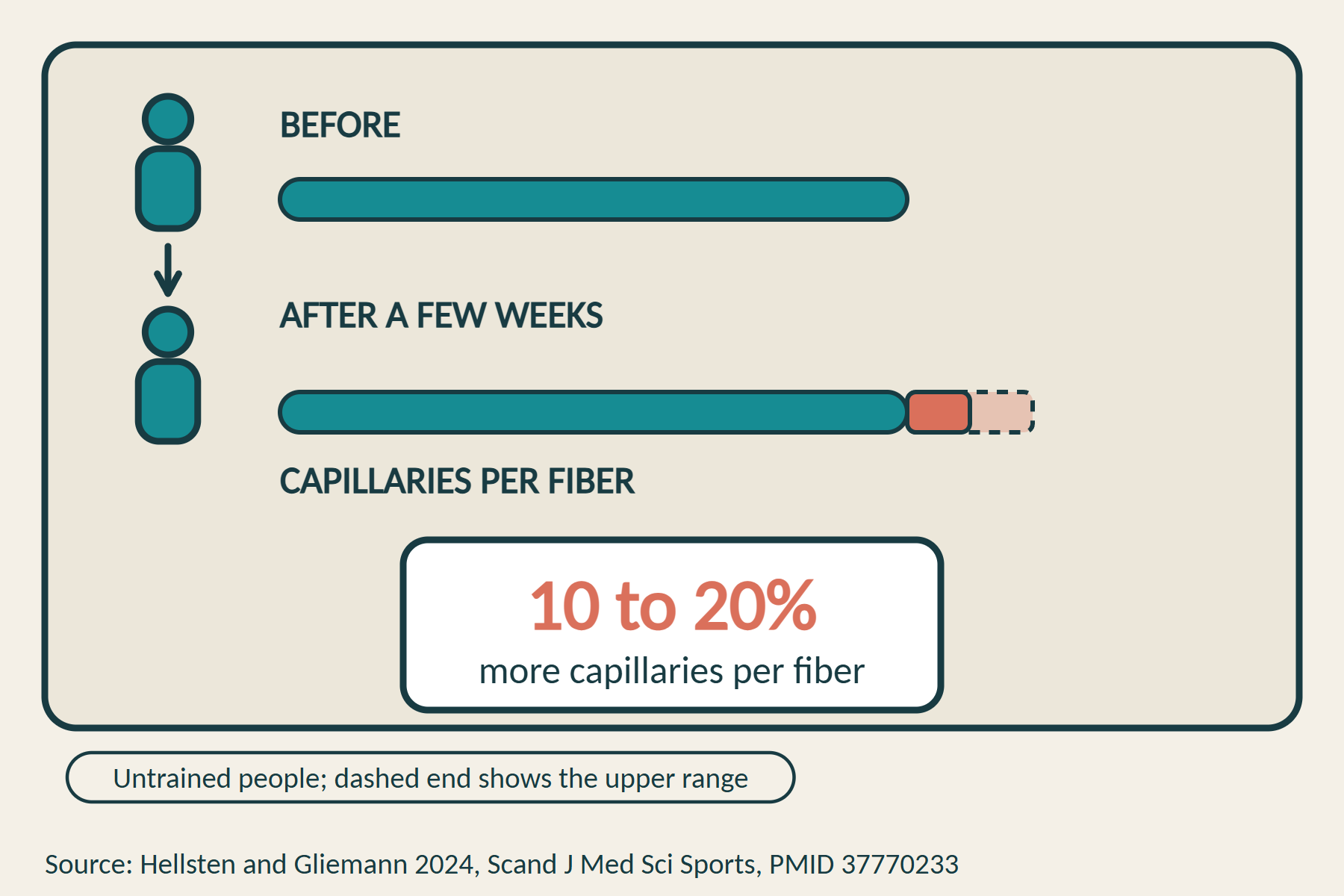
Studies show the number of capillaries per fiber increases by around 10 to 20 percent within a few weeks in untrained individuals (Hellsten and Gliemann 2024).
More capillaries per fiber shorten the diffusion distance oxygen must travel from blood into muscle, and lengthen the time red blood cells spend in contact with the tissue.
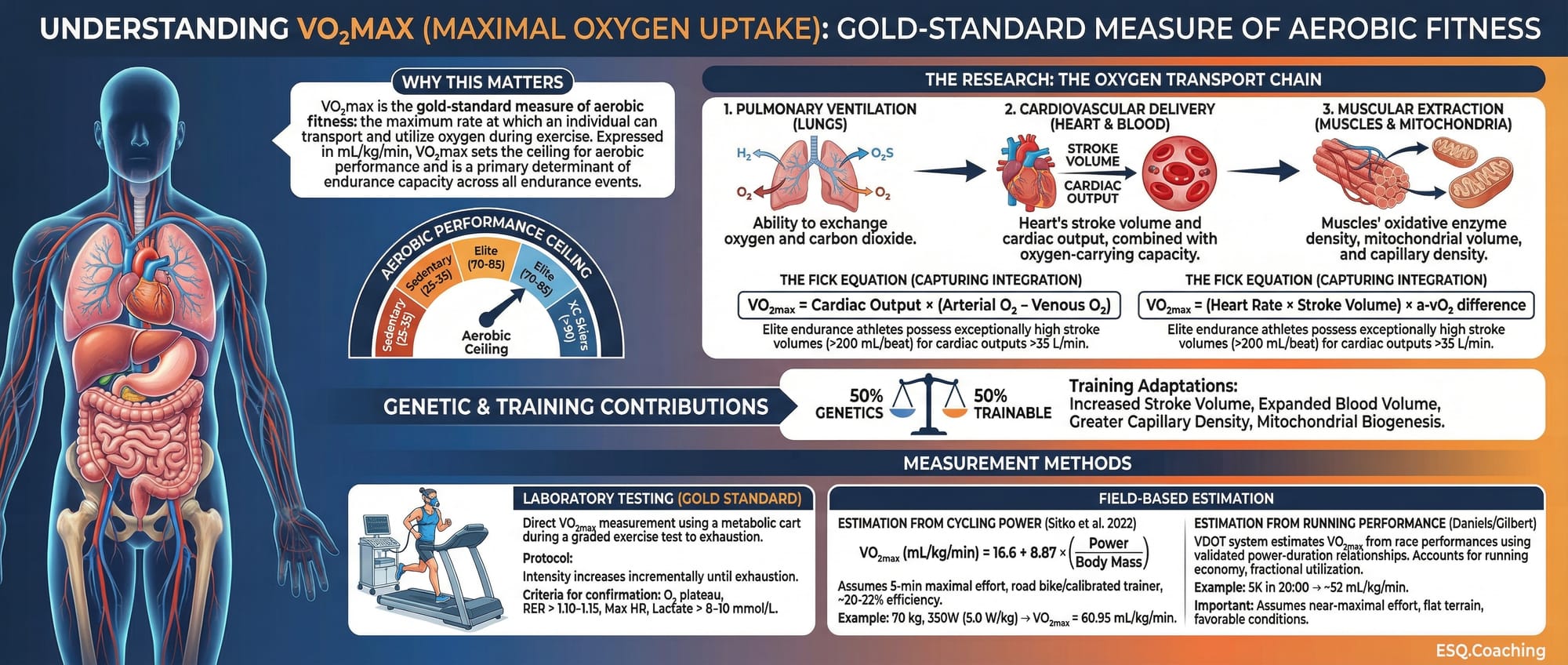
The result is a higher capacity for the muscle to extract oxygen, a quantity physiologists call the arteriovenous oxygen difference.
Research reports that capillarization is associated with measurable improvements in oxygen extraction during exercise in humans.
Whether more capillaries cause better performance is less settled, and direct evidence for that causal link is scarce.
Capillary growth is faster early on in untrained people and progresses more slowly in well-trained endurance athletes.
This rests on one review of the research, not a single trial, and the capillary figure is a rounded summary across studies.
If you have 60 seconds, I would value your anonymous feedback. You can share it here.
Health disclaimer
This summarizes one review of research on muscle capillaries and cannot predict how any one person's muscle responds. It is not a training recommendation. Not medical advice.
 Thomas Mortelmans
 Thomas Mortelmans
 Thomas Mortelmans
Keep going
Gradescale turns your training history into the models in this piece: power-duration, load balance, and readiness, each with its sources.
Training plans built on the same evidence base:
Thomas MortelmansJoin our Discord community:
Thomas Mortelmans